An Entrance Door Lock fails in the real world for surprisingly boring reasons: the wrong backset, the wrong door thickness range, weak latch alignment, cheap cylinders, poor weather sealing, or smart features that look great in a brochure but cause headaches in daily use. This article breaks the decision down into a simple framework: what threats you’re actually trying to stop, what convenience you need, and what your door can physically support. You’ll get a clear comparison table, an installation-and-fit checklist, and a sourcing/QA list you can use when evaluating a manufacturer such as Zhongshan Kaile Technology Co., Ltd. or any other supplier.
Table of Contents
- Outline
- What Problems Should an Entrance Door Lock Solve?
- What Are You Protecting Against?
- Which Lock Type Fits Your Door and Use Case?
- Which Features Matter and Which Are Just Noise?
- What Fit Measurements Prevent Most Returns?
- How Do You Judge Build Quality Without Guessing?
- How Do Smart Locks Stay Secure and Reliable?
- What Maintenance Keeps Locks Working Longer?
- What Should Buyers Ask a Supplier?
- FAQ
- Conclusion and Next Steps
Outline
- Define the daily pain point (lockouts, tenant turnover, weather exposure, safety requirements).
- Match the threat level (casual tampering vs. targeted forced entry) to the lock’s core structure.
- Choose the right lock type (mortise, tubular, rim, smart retrofit) for your door and budget.
- Validate fit specs (backset, door thickness, handedness, latch plate, strike, edge prep).
- Confirm quality evidence (cycle testing, corrosion resistance, material, finish, packaging).
- Plan user access and support (keys, codes, app, audit trail, emergency override).
- Set a maintenance plan (alignment checks, lubrication, battery routine, user training).
What Problems Should an Entrance Door Lock Solve?
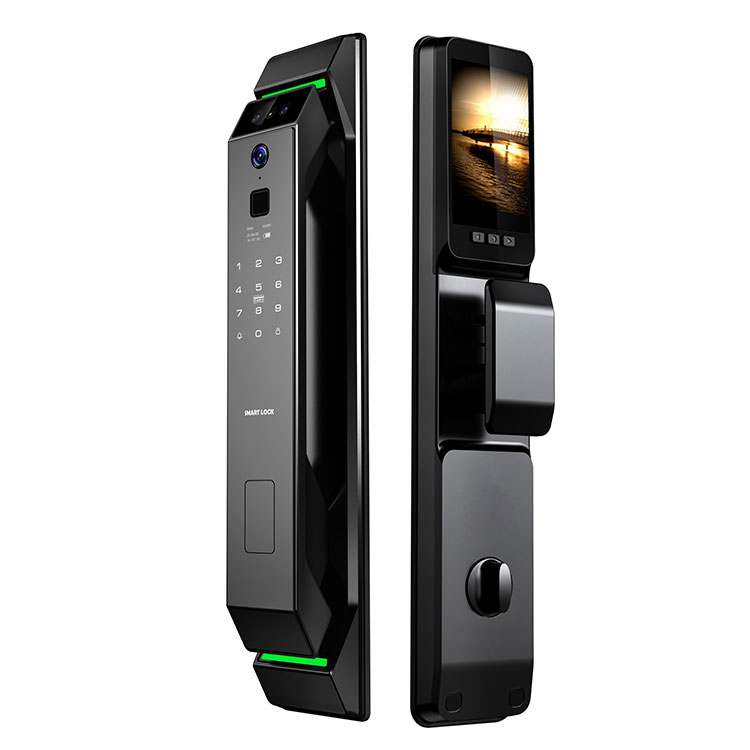
Most people shop for an Entrance Door Lock like it’s a gadget. Buyers who are happiest treat it like a system that must work on the worst day: heavy rain, hands full of groceries, a stressed tenant, or a door that swells in summer heat.
Common customer pain points (and what they usually mean):
- “I keep getting locked out.” The latch alignment is off, the door is sagging, or the lock has poor tolerance.
- “Keys are a nightmare.” You need controlled access (key management or codes), not just “more keys.”
- “The lock feels loose after a few months.” Thin materials, weak through-bolts, or installation on a weak door skin.
- “It rusted / looks ugly fast.” The finish and base metal don’t match your environment (coastal, high humidity, harsh cleaners).
- “Smart features are unreliable.” Poor power planning, unstable app ecosystem, or no mechanical override plan.
The goal isn’t a “cool lock.” The goal is fewer failures, fewer returns, fewer angry messages, and a front door that feels solid every single time.
What Are You Protecting Against?
Security gets clearer when you stop talking about “high security” and start naming the threats. Your lock choice changes a lot depending on which box you’re trying to check.
| Threat / Scenario | What Actually Helps | What Usually Doesn’t |
|---|---|---|
| Casual tampering (trying handles, simple prying) | Solid latch/bolt engagement, reinforced strike, tight door alignment | Extra “modes” in an app |
| Forced entry (kick-in risk) | Strong deadbolt/mortise structure, long screws into framing, strike reinforcement | Fancy handle styling without structure |
| Unauthorized copying of keys | Restricted keyways, key control policy, or code-based access | “Many keys included” |
| Operational access (rentals, staff turnover) | Time-limited codes, audit trail, easy credential revocation | Sharing one master key forever |
| Weather and corrosion | Corrosion-resistant materials, proven surface treatment, sealing and drainage | Assuming “stainless” solves everything |
Reality check: A lock can’t “outperform” a weak door frame. For meaningful security, pair the lock with a reinforced strike plate and strong fasteners into the framing—not just into the thin jamb trim.
Which Lock Type Fits Your Door and Use Case?
Choosing an Entrance Door Lock starts with the door construction and preparation. A lock that’s perfect on paper can be a bad match for your existing cutouts.
Lock types you’ll most often see for entrance doors:
- Mortise locks: Robust, often preferred for heavier doors and higher-traffic settings; requires a mortise pocket in the door edge.
- Tubular (cylindrical) locks: Common residential format; easier retrofit if your door already has standard bore holes.
- Rim / surface-mounted solutions: Useful for certain retrofit constraints; aesthetics and door style matter a lot here.
- Smart locks (retrofit or full replacement): Add code, fingerprint, app, or remote access; reliability depends on power, installation, and software support.
If you’re managing apartments or hospitality, you may prioritize turnover speed and audit logs. If it’s a single-family home, you might prioritize weather resistance, mechanical feel, and simple emergency access.
Which Features Matter and Which Are Just Noise?
Features should directly reduce pain: fewer lockouts, faster access, stronger deterrence, and easier management. If a feature doesn’t reduce pain, it’s probably marketing.
Features that often solve real problems:
- Auto-lock with adjustable delay: Prevents “I forgot to lock it” without being annoying.
- Multiple access methods: Code + key override (or code + card) keeps you operational when something fails.
- Audit trail and time-limited codes: Useful for rentals, cleaners, and maintenance crews.
- Built-in tamper alerts: Helps you react early (especially in multi-unit properties).
- Weather-focused design: Durable finishes, sealed electronics, and stable outdoor performance.
Features you should scrutinize before paying extra:
- Camera/doorbell integration: Great when it’s reliable; frustrating when it drains batteries or has lag.
- Face recognition: Convenient, but you want strong anti-spoof measures and stable low-light performance.
- “Works with everything” claims: Interoperability depends on app ecosystem and long-term updates, not the sticker on the box.
What Fit Measurements Prevent Most Returns?
Fit issues are the #1 reason otherwise-good locks get returned. Before you buy an Entrance Door Lock in bulk (or even for one home), validate these measurements.
Pre-purchase fit checklist:
- Door thickness: Confirm the supported range and whether spacers are included.
- Backset: Measure from door edge to the center of the bore hole.
- Hole sizes and spacing: Standard bore vs. custom prep; confirm any additional holes for smart lock wiring or modules.
- Handedness: Left/right and in-swing/out-swing constraints can affect latch orientation and handle ergonomics.
- Latch/strike alignment: If the door rubs or sags now, fix the door first or you’ll blame the lock later.
- Frame condition: A cracked jamb or weak frame undermines even premium locks.
Procurement tip: Ask for a dimension drawing and installation template before placing a large order. Your installer will thank you, and you’ll cut returns dramatically.
How Do You Judge Build Quality Without Guessing?
When buyers say “high quality,” they often mean “it feels heavy.” Weight alone can be misleading. Better signals are materials, tolerances, and verified testing.
Quality signals worth requesting from a supplier:
- Cycle testing: Evidence the lock survives repeated daily use (especially for apartments or offices).
- Corrosion resistance: Salt-spray or equivalent tests if you ship to coastal or humid regions.
- Material clarity: Confirm the metal grade, cylinder type, and critical wear parts.
- Finish consistency: Look for uniform coating, scratch resistance, and consistent color across batches.
- Packaging protection: Shipping damage often looks like “quality problems.” Good packaging prevents it.
When evaluating manufacturers such as Zhongshan Kaile Technology Co., Ltd., your goal is to reduce uncertainty: drawings, test reports, samples, and a clear quality inspection process matter more than a long feature list.
How Do Smart Locks Stay Secure and Reliable?
A smart Entrance Door Lock should be judged on two tracks at the same time: physical security and operational reliability. If either track is weak, users will bypass it (and that defeats the point).
Operational reliability checklist for smart locks:
- Power plan: Battery type, typical life, low-battery warnings, and emergency power options.
- Mechanical override: A practical way in when electronics fail (and a plan for who holds that key).
- Offline behavior: The lock should remain functional without internet.
- Credential management: Easy to add/remove codes and set schedules for rentals and staff.
- Data and access logs: Helpful for accountability in shared properties.
Security habit that pays off: Use unique admin credentials, keep firmware/app updated when available, and avoid sharing one “forever code” across multiple users or units.
What Maintenance Keeps Locks Working Longer?
Most “lock failures” are door failures: swelling wood, loose hinges, misaligned strikes. A short maintenance routine keeps performance consistent.
Simple maintenance routine:
- Quarterly: Check screws, handle wobble, and strike alignment; tighten and realign as needed.
- Seasonally: Inspect weather exposure and clean exterior surfaces with non-harsh cleaners.
- For smart locks: Replace batteries proactively (especially before peak travel seasons), and test the backup entry method.
- After complaints: Inspect the door sag and latch engagement before replacing hardware.
What Should Buyers Ask a Supplier?
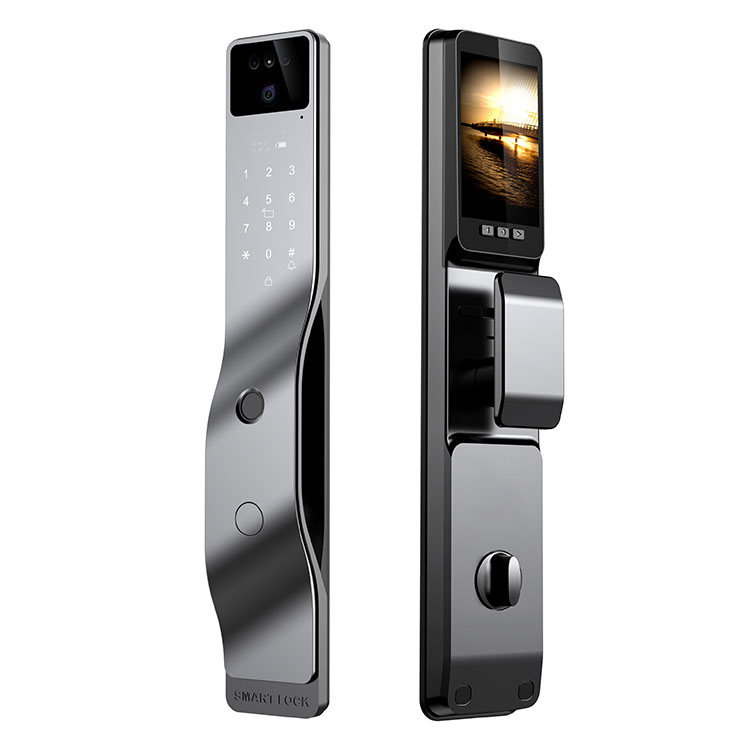
If you’re purchasing at scale, you’re not just buying an Entrance Door Lock—you’re buying consistency across shipments and support after delivery.
| Question to Ask | Why It Matters |
|---|---|
| Can you provide dimension drawings and an installation template? | Prevents fit issues and reduces returns. |
| What testing evidence supports durability and corrosion resistance? | Helps predict performance in high-traffic or harsh environments. |
| What is the quality inspection process and AQL standard (if used)? | Controls batch consistency and defect rates. |
| What customization is available (finish, logo, access methods, app ecosystem)? | Aligns the product with your brand and user needs without surprises. |
| What spare parts and after-sales support are offered? | Shortens downtime and simplifies maintenance for property managers. |
A low-drama sourcing flow that works:
- Request drawings + spec sheet → validate fit on your actual door.
- Order 1–2 samples → test installation, alignment, daily use feel.
- Run a short field trial → collect real user feedback.
- Confirm packaging + inspection standard → then place bulk order.
FAQ
Is a smart Entrance Door Lock always more secure than a traditional lock?
Not automatically. Smart features improve access control and monitoring, but physical strength still comes from the lock body, latch/bolt engagement, and door/frame reinforcement. The best choice is a lock that’s strong mechanically and reliable electronically.
What’s the most common reason a new lock “doesn’t work” after installation?
Misalignment. If the latch hits the strike plate edge, the lock feels sticky, users force it, and parts wear fast. Fix door sag, adjust hinges, and align the strike before blaming the lock.
Should I prioritize a deadbolt or a multi-point system?
For many doors, a well-installed deadbolt plus a reinforced strike is already a major upgrade. Multi-point systems can add security and seal performance, but they require correct door preparation and careful alignment—especially in climates where doors expand and contract.
How do I reduce lockouts in short-term rentals?
Use time-limited codes, keep a mechanical override plan, and add a clear guest guide. Also verify that auto-lock timing isn’t too aggressive; many lockouts happen when the door auto-locks before guests finish unloading.
What should I check for coastal or high-humidity projects?
Ask for corrosion-resistance testing evidence, choose finishes suited for salt air, and plan simple cleaning routines. Even good metals can stain if exposed to harsh chemicals or salt deposits for long periods.
How can I compare suppliers quickly without missing important details?
Use a fixed checklist: drawings + fit ranges, testing evidence, material/finish clarity, inspection standard, packaging, and after-sales support. This makes comparisons objective—especially when evaluating manufacturers like Zhongshan Kaile Technology Co., Ltd. alongside other options.
Conclusion and Next Steps
The “best” Entrance Door Lock is the one that matches your door, your users, and your real risk—without creating new daily friction. Start with fit measurements, then pick the structure and features that solve your specific pain points, and finally validate quality through evidence, not adjectives.
Ready to shortlist the right lock for your project?
If you’re sourcing for homes, apartments, or hospitality and want fewer installation issues and better long-term reliability, talk to a qualified supplier and request drawings, samples, and testing documentation. For product options and OEM/ODM discussions with Zhongshan Kaile Technology Co., Ltd., please contact us to share your door specs and project requirements.