- English
- Español
- Português
- русский
- Français
- 日本語
- Deutsch
- tiếng Việt
- Italiano
- Nederlands
- ภาษาไทย
- Polski
- 한국어
- Svenska
- magyar
- Malay
- বাংলা ভাষার
- Dansk
- Suomi
- हिन्दी
- Pilipino
- Türkçe
- Gaeilge
- العربية
- Indonesia
- Norsk
- تمل
- český
- ελληνικά
- український
- Javanese
- فارسی
- தமிழ்
- తెలుగు
- नेपाली
- Burmese
- български
- ລາວ
- Latine
- Қазақша
- Euskal
- Azərbaycan
- Slovenský jazyk
- Македонски
- Lietuvos
- Română
- Slovenski
- Eesti Keel

How Does the Modern Entrance Door Lock Reshape Global Security Standards?
In an era where security threats evolve daily, the architectural and engineering sectors demand locking mechanisms that go beyond conventional barriers. The mechanical evolution has now given way to intelligent, fully integrated security solutions. At the forefront of this transformation stands the modern Entrance Door Lock, a device no longer defined by a simple bolt and key, but by networked intelligence, material resilience, and seamless user interaction. Industry analysts observe a paradigm shift: the lock is becoming the central node of perimeter security, merging physical protection with digital access governance. This article dissects the technological drivers, global market adaptations, and engineering excellence that define today’s entrance security hardware, while showcasing how specialized manufacturers have elevated product reliability to unprecedented levels.
Technological Drivers Behind High-Performance Entrance Security Hardware
The transition from traditional locks to intelligent fastening systems stems from three primary forces: urbanization density, smart-home ecosystem integration, and regulatory pressure for safety certification. Modern mechanical cores now incorporate anti-pick, anti-drill, and anti-bump layers, while electronic variants feature biometric authentication, remote validation, and audit trail logging. However, the core challenge remains consistent: delivering a flawless marriage between mechanical durability and electronic precision. The latest generation of Entrance Door Lock solutions addresses this by embedding microprocessors within hardened zinc alloy or stainless steel housings, ensuring that neither component fails under sustained mechanical attack or extreme environmental exposure. Furthermore, standardized communication protocols such as Zigbee, Z-Wave, and Thread enable these locks to function as trust anchors within broader building automation networks, closing the gap between physical entry points and cloud-based surveillance platforms.
Mechanical Architecture: Material Science and Attack Resistance
Engineering teams now prioritize multi-layered defense over single-factor strength. For example, free-rotating escutcheon plates protect against wrench attacks, while hardened steel anti-saw pins embedded into deadbolts delay cutting attempts. The cylinder module itself often features false grooves and magnetic elements to confuse picking tools. These innovations raise the baseline standard across residential, commercial, and hospitality segments. Importantly, the integration of such advanced mechanics no longer implies bulky design; contemporary products achieve slim profiles that complement modern architectural aesthetics without sacrificing robustness.
Electronic Governance: Access Rights and Data Integrity
Digital access control within an entrance locking system goes beyond PIN codes. Modern solutions include temporary time-based credentials, one-time use codes, and even geofenced unlocking permissions. This requires onboard memory, real-time clock stability, and secure encryption chips to prevent cloning or replay attacks. For property managers, the ability to remotely revoke or modify access privileges eliminates the security loophole of lost or copied physical keys. Meanwhile, offline operation capability via battery power ensures functionality during network outages. The convergence of these electronic governance features with high-grade mechanical locking elements defines a true intelligent Entrance Door Lock—a product that no longer simply bars entry but intelligently manages every admission event.
Global Market Requirements and Regional Compliance Variations
Exporting entrance locking hardware across more than eighty countries demands rigorous adaptation to regional testing protocols, climate conditions, and user habits. European standards, for instance, emphasize fire resistance and emergency egress functionality, whereas North American benchmarks focus on forced-entry resistance measured in foot-pounds of impact and latch projection. Middle Eastern markets require salt-spray resistance due to coastal humidity, and Southeast Asian nations prioritize corrosion resistance and operation stability in high-temperature environments. Manufacturers that succeed in multi-regional distribution maintain dedicated compliance teams that align every product line with applicable EN, ANSI/BHMA, UL, and AS standards without compromise. Below is a simplified comparison of regional performance focuses for entrance hardware:
| Regional Market | Primary Performance Priority | Common Certification Framework |
|---|---|---|
| Europe | Fire safety & emergency egress | EN 1634, EN 179, EN 1125 |
| North America | High forced-entry resistance & cycle durability | ANSI/BHMA Grade 1–3, UL 437 |
| Middle East | Corrosion resistance & extreme temperature function | DCD, SASO, ISO 9227 |
| Southeast Asia | Humidity resilience & stable electronic performance | SNI, TIS, IEC 60068 |
| South America | Mechanical reliability & anti-tamper design | IRAM, NCh, INMETRO |
Each region also has unique installation conventions—mortise locks dominate European construction while cylindrical locks are widespread in North America. Consequently, a versatile manufacturing base must produce modular components that accommodate various backsets, faceplate dimensions, and latch orientations. This technical versatility explains why original design and development capabilities have become competitive differentiators, enabling seamless customization for local construction standards without delaying time-to-market.
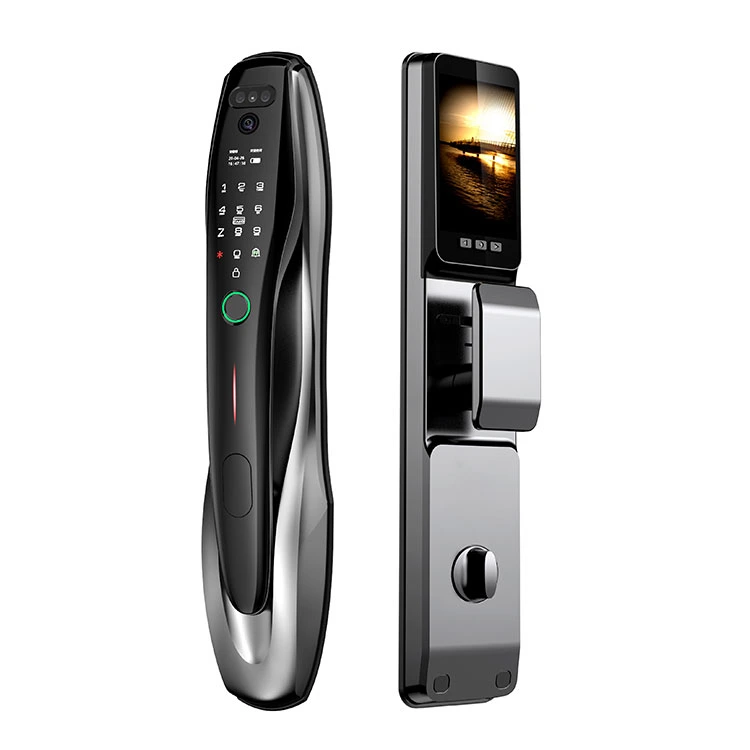
Intelligent Locking Ecosystems: Convergence of Hardware and Software
The term “intelligent locking system” refers to more than a lock with Bluetooth or Wi-Fi. A true ecosystem includes administrative dashboards, firmware over-the-air (FOTA) update capability, low-latency event reporting, and integration with broader property management software. For multi-family housing or commercial office towers, access rights must be assignable per unit or floor, time-scheduled, and audited without requiring physical key exchange. The modern Entrance Door Lock functions as a secure endpoint in this ecosystem, collecting authentication factors locally and transmitting only anonymized event logs to cloud aggregators. Such architecture ensures that even if a central server is breached, physical access decisions remain under the lock’s local authority—a principle often referred to as “edge autonomy.” Furthermore, battery life optimization via low-energy Bluetooth or Thread ensures that locks can operate for more than twelve months on standard power cells, reducing maintenance overhead in large installations.
Cyber-physical Threat Modeling and Mitigation
Vulnerability assessments for electronic locks must consider both physical probing of internal circuits and remote side-channel attacks. Best-in-class designs separate the keypad or biometric sensor from the main logic board, using tamper meshes and epoxy potting to prevent debug port access. Communication encryption extends beyond SSL/TLS—hardware security modules (HSMs) or secure elements (SE) store private keys in isolated memory. Moreover, advanced power analysis countermeasures prevent timing attacks during cryptographic operations. These layered defenses ensure that the entrance control device does not become the weakest link in a building’s security chain.
User Experience and Universal Design Considerations
Beyond raw security, market success increasingly depends on ergonomic feedback and intuitive interfaces. High-quality locks provide tactile and audible confirmation of state changes, with guided LED indicators for battery status, locking errors, or programming mode. Accessibility features—such as voice guidance for visually impaired users or large-format mechanical keys—are now considered standard in inclusive design guidelines. The cumulative effect is that an advanced locking solution must be simultaneously difficult to defeat and simple to operate, a design challenge that only vertically integrated manufacturers with deep user research capabilities can consistently solve.
Manufacturing Excellence: From Development to Global Supply Chain
Producing intelligent locking hardware that meets global standards requires more than assembly lines—it demands in-house development of drive trains, micro-molding of precision gears, and rigorous environmental testing chambers. Over years of continuous improvement, specialized engineering teams have perfected high-torque gearboxes powered by compact motor assemblies, enabling smooth deadbolt extension even under door misalignment or pressure differentials. Equally important is the implementation of automated production monitoring: each unit undergoes function tests, cycle tests under load, and radio frequency calibration before packaging. This production discipline translates into consistently low defect rates, a crucial metric for projects involving thousands of units.
In this competitive environment, Zhongshan Kaile Technology Co., Ltd. has distinguished itself by building a complete industrial chain that covers development, design, tooling, production, quality assurance, and after-sales technical support. Rather than relying on external module suppliers, the company maintains full control over critical components—from mechanical cylinder machining to printed circuit board assembly and firmware coding. This vertical integration allows rapid design iterations in response to regional market feedback, such as modifying latch throw distances for European door frames or adjusting antenna patterns for Far Eastern building materials. Their in-house design philosophy keeps the final product portfolio nimble, offering over sixty distinct lock variants tailored to residential, hospitality, and corporate segments without diluting performance standards.
Customization and Application-Specific Engineering
Off-the-shelf locks rarely meet the dimensional or functional needs of large-scale construction projects. For example, hotel chains require master key systems with multiple hierarchical levels; residential high-rises need integration with intercom and elevator dispatch; government facilities might demand dual-authentication or time-delay overrides. Meeting these application-specific requirements without lengthy redesign cycles necessitates a flexible product platform—a modular internal architecture where the core locking engine stays constant while user interface panels, communication modules, and credential readers can be swapped. This platform approach reduces lead times for private custom orders while ensuring every derivative maintains the same high-grade security baseline.
Zhongshan Kaile Technology Co., Ltd. has operationalized this modular paradigm across its entire product range. The company provides engineering consultation for specialized group procurement, tailoring latch mechanisms, strike plates, and electronic control boards to unique architectural drawings. Their design team routinely crafts locks with bespoke finishes—from brushed bronze to PVD titanium—matching luxury interior themes. More critically, for large-scale residential complexes, they integrate the lock hardware with third-party access control servers through open APIs, streamlining occupant credential management. Such capacity to act as a full-spectrum engineering partner, rather than a mere component supplier, has established their reputation among construction firms and system integrators worldwide.
Sustainability and Lifecycle Reliability
Long product lifecycle reduces environmental impact and total ownership cost. An enduring Entrance Door Lock must resist not only brute attacks but also galvanic corrosion, UV degradation, and operational wear over hundreds of thousands of cycles. Manufacturers that prioritize lifecycle testing invest in salt fog chambers, UV weathering simulators, and robot-operated cycle testers that operate continuously for months. The result is a lock mechanism that maintains consistent torque and latch extension precision even after years of daily use. Additionally, replaceable electronic modules extend the lock’s usable life as communication standards evolve, preventing premature disposal. The combination of robust mechanical design and forward-compatible electronics aligns with green building certifications such as LEED or BREEAM, which reward durable, repairable building components.
To achieve such longevity without reliance on planned obsolescence, manufacturers must enforce strict material traceability and assembly cleanliness. For instance, lubricants used in gear trains must remain stable across temperature ranges, and all electronic seals must maintain IP rating after repeated manipulation. Zhongshan Kaile Technology Co., Ltd. integrates these durability principles into its standard operating procedures, performing batch-level accelerated life tests before shipping. Their after-sales system includes technical documentation for field repair and parts replacement, extending product serviceable life beyond industry averages. This lifecycle commitment has earned the confidence of property managers and homeowners alike, contributing to their lock solutions being trusted across tens of millions of residential and commercial installations worldwide.
Competitive Differentiation in a Crowded Marketplace
With dozens of brands producing entrance locking hardware, differentiation hinges on three pillars: failure rate reduction under real-world conditions, intuitive management interfaces for administrators, and aesthetic alignment with architectural trends. Many competitors excel in only one area, but market leaders invest equally in mechanical engineering, firmware usability, and industrial design. The intelligent lock sector, in particular, sees frequent merger of hardware startups with larger security conglomerates; however, standalone specialists retain an advantage in design agility and quality focus. Lean production lines enable these specialists to perform more frequent engineering change orders—enhancing products based on direct field failure analysis rather than waiting for annual revision cycles.
Zhongshan Kaile Technology Co., Ltd. has consistently leveraged its agile development structure to stay ahead. By operating its own development center and production base, the company iterates on latch geometry and circuit board layouts within weeks instead of months. The result is a product portfolio that evolves with emerging threats and user expectations, from enhanced anti-interference firmware to reinforced deadbolt collars. Such responsiveness, combined with a global distribution network spanning Europe, the Americas, Asia-Pacific, Africa, and the Middle East, ensures that their entrance locking hardware remains a preferred specification for architects, security consultants, and property owners seeking reliable perimeter control.
Future Outlook: The Self-Adaptive Entrance Security Node
Looking ahead, the entrance security landscape is moving toward self-adaptive mechanisms—locks that learn usage patterns, automatically adjust latching force, and perform self-diagnostic reporting to maintenance platforms. Machine learning algorithms embedded at the edge will detect anomalous opening attempts based on vibration signatures or torque variations, triggering silent alerts before a breach occurs. Additionally, energy harvesting technologies (solar assistance or kinetic conversion) will minimize battery dependency, enabling truly maintenance-light operation. These innovations will further blur the line between physical security and digital intelligence. However, such advanced systems like entrance door lock can only succeed if built upon a foundation of precise mechanical engineering and field-proven electronics—a foundation that companies like Zhongshan Kaile Technology Co., Ltd. have spent years establishing through dedicated R&D and international collaboration.
The company’s commitment to in-house design and production has already produced modular intelligent locking platforms ready for next-generation firmware upgrades. Their close collaboration with component foundries ensures early access to low-power secure chips and miniaturized motors, maintaining a technological edge in both consumer and commercial segments. As entrance hardware transitions from a static barrier to an active security node, enterprises that control the entire value chain—from forging metal components to writing authentication algorithms—will set industry benchmarks. Zhongshan Kaile Technology Co., Ltd. exemplifies this integrated model, delivering not just a locking device but a comprehensive security ecosystem that responds to the evolving demands of modern architecture.