- English
- Español
- Português
- русский
- Français
- 日本語
- Deutsch
- tiếng Việt
- Italiano
- Nederlands
- ภาษาไทย
- Polski
- 한국어
- Svenska
- magyar
- Malay
- বাংলা ভাষার
- Dansk
- Suomi
- हिन्दी
- Pilipino
- Türkçe
- Gaeilge
- العربية
- Indonesia
- Norsk
- تمل
- český
- ελληνικά
- український
- Javanese
- فارسی
- தமிழ்
- తెలుగు
- नेपाली
- Burmese
- български
- ລາວ
- Latine
- Қазақша
- Euskal
- Azərbaycan
- Slovenský jazyk
- Македонски
- Lietuvos
- Română
- Slovenski
- Eesti Keel

Why Does a Hotel Apartment Lock Matter for Smooth Stays and Faster Turnovers?
If you run a serviced apartment, boutique hotel, or mixed-use building, the door lock is not a “hardware detail.” It’s a daily system that touches revenue, reviews, staff workload, and risk. This guide breaks down what to choose, what to avoid, and how to make your access setup feel effortless for guests while staying manageable for your team.
Article Summary
A well-chosen Hotel Apartment Lock should reduce check-in friction, prevent key chaos, improve privacy, and streamline maintenance—without creating a new tech headache. In this article, you’ll learn the most common pain points operators face (lost keys, disputed entries, late-night lockouts, staff access confusion, and expensive replacements), the feature checklist that actually matters, and a practical selection method you can use even if you manage multiple buildings.
You’ll also find an operations workflow, a comparison table, and a FAQ section to help you decide quickly and communicate your requirements to suppliers.
Contents
- Outline you can follow
- The real pain points operators want solved
- What “Hotel Apartment Lock” should mean in practice
- Feature checklist that protects your time and reputation
- Comparison table to choose the right access method
- A simple workflow for staff, guests, and emergencies
- Installation and door compatibility notes
- Maintenance, auditing, and lifecycle cost
- Picking a dependable long-term supplier
- FAQ
- Next steps
Outline you can follow
- Clarify your operating model: short-stay, long-stay, or hybrid.
- List your top five failure scenarios (lost keys, late arrivals, disputed access, staff turnover, emergency entry).
- Choose an access method that matches guest behavior and staff reality.
- Confirm reliability basics: stable power, mechanical backup, and permissions control.
- Plan workflows: check-in, housekeeping, maintenance, and emergency protocols.
- Verify compatibility with your doors and hardware standards before ordering in bulk.
- Measure total cost over years, not only purchase price.
Fewer lockouts Faster turnovers Cleaner access control Less key replacement Better guest reviews
The real pain points operators want solved
Most complaints around access aren’t described as “lock problems.” They show up as check-in stress, guest distrust, staff confusion, or a surprise cost that lands at the worst time. A Hotel Apartment Lock becomes a business tool when it removes these recurring issues:
- Late-night arrivals that require someone to physically hand over a key.
- Lost keys and replacements that cost more than the key itself (labor, rekeying, downtime).
- Disputed entry where a guest claims “someone entered my room,” and you need clarity fast.
- Housekeeping access confusion (wrong room, wrong time, or “I can’t open it” calls).
- High turnover staff where permissions should change instantly, not “next week.”
- Emergency entry that must be safe, controlled, and documented.
Operator reality check:
If your lock system requires a specialist to do everyday tasks, your team will create workarounds.
Workarounds become vulnerabilities.
The best setup is the one your staff can follow consistently at 2 a.m. without improvising.
When you frame your selection around pain points (instead of shiny features), the decision gets simpler: you’re buying fewer interruptions, fewer disputes, and more predictable operations.
What “Hotel Apartment Lock” should mean in practice
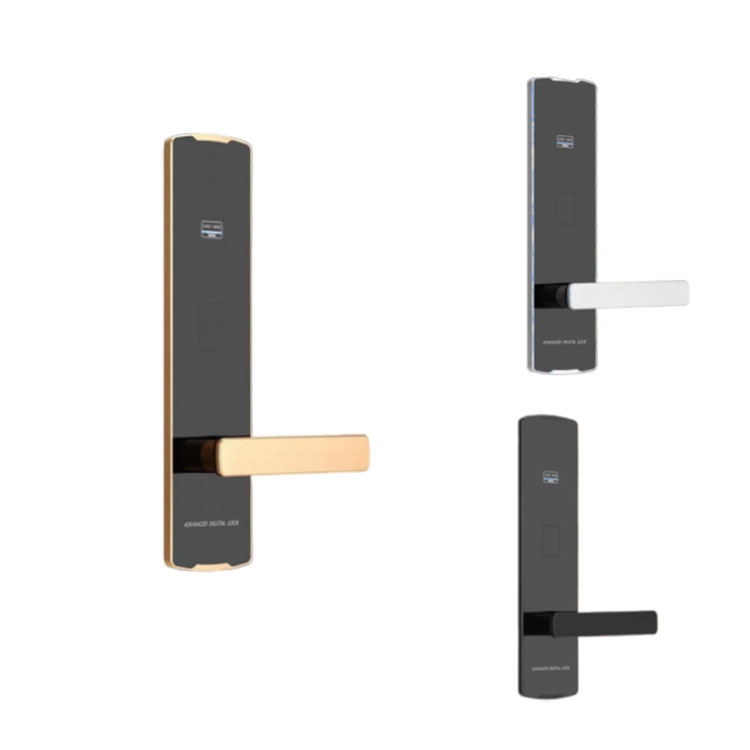
A Hotel Apartment Lock isn’t just a lock that “looks hotel-ish.” It’s access control designed for frequent guest turnover, multiple user roles (guests, housekeeping, maintenance, supervisors), and the need to reduce friction without sacrificing security.
In practical terms, you want a system that can:
- Issue time-bound access (so yesterday’s guest can’t open today’s door).
- Support multiple credential options (card, code, mobile—depending on your property style).
- Maintain privacy and reduce “who entered when” ambiguity.
- Allow fast permission changes when staff changes happen.
- Provide a reliable fallback method when batteries die or phones fail.
If you manage a hybrid property (some short-stay, some long-stay), the definition matters even more: long-stay tenants value stability and privacy, while short-stay guests value convenience and self check-in. The best Hotel Apartment Lock approach supports both without forcing you into two separate systems.
Feature checklist that protects your time and reputation
Here’s a checklist grounded in everyday operations. Treat it like your requirements doc. If a supplier can’t explain these clearly, you’re likely buying future problems.
- Clear permission roles: guest, housekeeping, maintenance, supervisor—each with limited, appropriate access.
- Time-based credentials: automatic expiration reduces “forgotten access” risk.
- Audit-friendly records: you need a trustworthy way to review access when disputes happen.
- Reliable power strategy: low-battery warnings, simple replacement, and predictable uptime.
- Mechanical backup: not because you expect failure—because you can’t afford downtime.
- Fast onboarding: your front desk or ops team should learn it without heavy training.
- Durable build and finish: frequent use means the handle, latch, and exterior finish must withstand abuse.
- Guest-proof usability: intuitive entry reduces support calls, especially for international guests.
| Operational pain point | What to look for | Why it matters |
|---|---|---|
| Lost keys and repeated replacements | Card/code/mobile options + quick credential revocation | Reduces rekeying events and staff time spent “fixing access” |
| Late arrivals and self check-in | Time-bound credential delivery + simple guest instructions | Fewer after-hours calls and smoother guest experience |
| Disputed entry and privacy complaints | Role-based access + clear activity records | Supports fair resolution and strengthens guest trust |
| Housekeeping efficiency | Staff permissions that match schedules and zones | Less “wrong room” risk and fewer lockout interruptions |
| Emergency entry needs | Controlled override procedure + documented access | Balances safety with accountability |
Notice what’s missing: flashy extras that don’t reduce workload. If a feature doesn’t help staff work faster, reduce disputes, or prevent downtime, it shouldn’t be on your “must-have” list.
Comparison table to choose the right access method
Different properties need different entry experiences. Use this table to align the access method with your guest mix, staffing model, and operational tolerance for support calls.
| Access method | Best for | Strengths | Watch-outs |
|---|---|---|---|
| Card-based entry | Hotels, serviced apartments with front desk | Familiar to guests, fast entry, easy to replace a single card | Card distribution/logistics, guests may demagnetize or lose cards |
| PIN code entry | Self check-in, short-stay units, remote operations | No physical handover, easy to issue and expire codes | Guests can mistype; needs clear keypad usability and policy on shared codes |
| Mobile credential entry | Tech-friendly guests, premium properties | Convenient, can reduce front desk load, supports remote workflows | Phone battery/app issues; always keep a fallback method |
| Hybrid (card + code + backup) | Mixed-use buildings and high turnover properties | Flexible for different guest types and operational scenarios | Requires a clear internal process so staff don’t improvise |
If you’re unsure, hybrid is often the safest operational choice: it handles edge cases without forcing staff to invent workarounds. The best Hotel Apartment Lock setup is the one that still works when guests arrive late, phones die, and staff change shifts.
A simple workflow for staff, guests, and emergencies
Even a great lock becomes a mess without a consistent workflow. Here’s a clean, repeatable operating model you can adapt across properties.
Guest workflow
- Reservation confirmed → credential prepared (card/code/mobile) with check-in/check-out window.
- Arrival → guest receives one clear instruction message (no wall of text).
- Entry → if first attempt fails, guest follows a single fallback step before calling support.
- Departure → credential automatically expires, no manual chasing required.
Staff workflow
- Housekeeping access limited to assigned rooms/time windows.
- Maintenance access requires logging (who, when, where).
- Supervisor override reserved for exceptions, not routine access.
- Staff offboarding includes immediate credential removal.
Emergency entry principle: define what qualifies as an emergency, who can authorize it, and how you document it. That way, you protect guests, staff, and your brand at the same time.
If your property is remote-managed, create a “two-step rule” (for example: supervisor approval + documented reason) so emergency access never becomes a casual shortcut.
Installation and door compatibility notes
Before you buy in bulk, validate your door and hardware standards. Small mismatches create expensive delays. You don’t need to be a locksmith to ask the right questions—just be systematic.
- Door type and thickness: confirm the lock fits your common door spec across units.
- Handing and swing direction: left/right handing issues are a classic source of on-site frustration.
- Latch and strike alignment: misalignment leads to “the lock is broken” tickets that are actually door-frame issues.
- Existing cutouts: retrofits are easier when the lock supports your current preparation.
- Common area consistency: if you plan the same credential for unit doors and shared spaces, confirm it upfront.
The easiest way to avoid headaches is to do a small pilot: pick a few units with the most common door type, plus one “problem door.” If the lock performs well there, scaling is far less risky.
Practical tip: standardize as much as possible. The more lock variants you have, the more spare parts you’ll need—and the more your team will resent you during urgent repairs.
Maintenance, auditing, and lifecycle cost
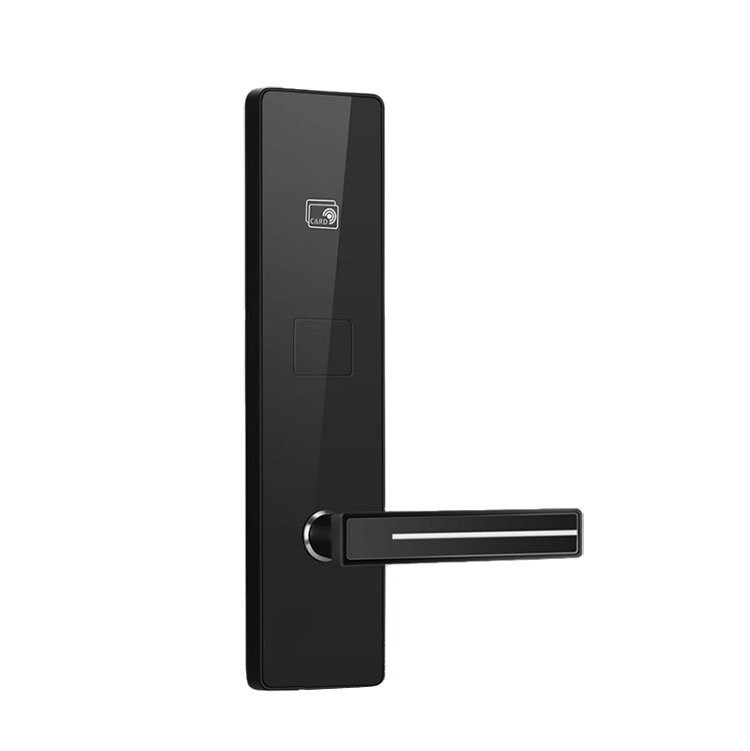
The purchase price is rarely the real cost. For a Hotel Apartment Lock, the hidden costs are support calls, replacements, and staff time spent resolving access issues. Plan for the full lifecycle:
- Battery routine: set a replacement schedule rather than waiting for failures.
- Spare inventory: keep a small stock of critical parts to avoid downtime.
- Audit reviews: have a simple process to check access records when a complaint appears.
- Wear and tear: high-frequency doors need more durable external components.
- Policy clarity: define rules for shared credentials, staff access, and exception handling.
A useful question to ask yourself:
“If this lock fails at midnight on a holiday, what’s our plan?”
A solid system includes a human process—not just hardware.
If you operate multiple sites, track “access incidents” like you track maintenance tickets. Over time, you’ll see patterns: which credential method causes the most lockouts, what time failures happen, and where training is needed. That data makes your next upgrade smarter—and helps you justify a standardization decision.
Picking a dependable long-term supplier
When you scale from “a few units” to “a portfolio,” support and consistency matter. You want a supplier that can keep your models stable, provide clear documentation, and help you standardize across properties.
This is where working with an experienced manufacturer can simplify everything. For example, Zhongshan Kaile Technology Co., Ltd. focuses on hotel and apartment access solutions aimed at practical operations: stable day-to-day usage, clearer credential management, and smoother turnover routines.
Supplier questions that save you pain later
- Can you keep a consistent model line for future expansions?
- What’s the recommended maintenance routine and typical spare parts list?
- How do you handle staff credential changes and access role definitions?
- What does your after-sales support look like for multi-property operators?
- Can you advise on standardization to reduce variants and spare inventory?
You’re not just buying a lock—you’re buying operational stability. A strong Hotel Apartment Lock partner should make your system easier to run, not harder to explain.
FAQ
Q: What’s the biggest mistake people make when choosing a Hotel Apartment Lock?
Picking features before mapping workflows. If you don’t define guest check-in, housekeeping access, and emergency procedures first, the “best lock” becomes a daily confusion machine.
Q: Do I need card access, PIN codes, or mobile entry?
Choose based on guest behavior and staffing. Card access is familiar; codes are great for self check-in; mobile entry can be premium but needs a fallback. Hybrid options often reduce edge-case stress.
Q: How do I reduce lockout calls?
Make entry instructions short and consistent, choose a lock with intuitive interaction, and provide one simple fallback step. Operational clarity beats long help messages every time.
Q: How should housekeeping access be handled?
Use limited permissions by room and time window when possible. Avoid “master access for everyone,” which increases risk and creates dispute headaches when something goes wrong.
Q: Is a mechanical backup still necessary?
Yes—because downtime is expensive. Backup entry keeps operations moving when batteries are low, devices fail, or guests arrive with unexpected constraints.
Q: How can I control costs over time?
Standardize models, keep small spare inventory, set a battery routine, and track support tickets. The goal is fewer emergencies and fewer repeated “small fixes” that drain staff hours.
Next steps
If you’re ready to reduce lockouts, simplify turnovers, and upgrade guest experience with a Hotel Apartment Lock setup that your team can run consistently, put your requirements into a short checklist (door specs, preferred access methods, role definitions, and fallback needs) and move forward with a standardized plan.
Want a practical recommendation for your building type and workflow? contact us and share your property size, door details, and operating model—then we’ll help you narrow down an access approach that fits your day-to-day reality.