- English
- Español
- Português
- русский
- Français
- 日本語
- Deutsch
- tiếng Việt
- Italiano
- Nederlands
- ภาษาไทย
- Polski
- 한국어
- Svenska
- magyar
- Malay
- বাংলা ভাষার
- Dansk
- Suomi
- हिन्दी
- Pilipino
- Türkçe
- Gaeilge
- العربية
- Indonesia
- Norsk
- تمل
- český
- ελληνικά
- український
- Javanese
- فارسی
- தமிழ்
- తెలుగు
- नेपाली
- Burmese
- български
- ລາວ
- Latine
- Қазақша
- Euskal
- Azərbaycan
- Slovenský jazyk
- Македонски
- Lietuvos
- Română
- Slovenski
- Eesti Keel

How Can a Big Handle Door Lock Make High-Traffic Doors Safer and Easier to Use?
Article Abstract
A door lock can be “secure” on paper but still fail in real life if it’s awkward to operate, jams under misalignment, or wears out in months on a busy entrance. That’s where a Big Handle Door Lock often shines: it prioritizes grip, leverage, and consistent operation—especially on doors that see frequent use.
In this guide, I’ll break down the most common buyer pain points (sticking latches, slippery handles, rushed entry, weather exposure, and high-cycle wear), then show how to choose the right big-handle configuration, materials, and cylinder options for your door type. You’ll also get installation checks, a comparison table, troubleshooting tips, and a simple maintenance routine to keep the lock working smoothly.
Table of Contents
- Why many doors feel “hard to unlock” in daily use
- What a big handle door lock is (and what it is not)
- Best-fit scenarios and door types
- Quick comparison table
- A practical selection checklist
- Installation and alignment checks
- Maintenance that prevents 80% of failures
- FAQ
- Final takeaway and next steps
Outline
- Identify the real-world problems behind “bad locks” (it’s often the door, not just the hardware).
- Understand how a big handle improves leverage, speed, and consistency.
- Match lock structure, cylinder choice, and materials to your environment and usage level.
- Use alignment checks + simple upkeep to avoid callbacks, lockouts, and premature wear.
Why Many Doors Feel “Hard to Unlock” in Daily Use
When buyers complain that a lock is “bad,” they’re usually describing a usability problem that shows up under real conditions: people carrying packages, wearing gloves, rushing through a staff door, or trying to open a gate in the rain. Here are the pain points I hear most often—and why they matter.
Pain point 1: Poor grip and low leverage
Small knobs and slim levers can be frustrating for elderly users, gloved hands, or anyone with reduced hand strength. In busy settings, people start forcing the hardware, which speeds up wear.
Pain point 2: Sticky latch caused by misalignment
If a door is sagging or the strike plate is slightly off, the latch rubs and you need extra force to retract it. The “lock problem” is actually an alignment problem—and the wrong handle makes it worse.
Pain point 3: Weather exposure and corrosion
Outdoor entrances face moisture, salt air, dust, and temperature swings. Without suitable materials and surface treatment, internal friction increases and operation becomes rough.
Pain point 4: High-cycle wear
A lock that feels fine on day one can loosen after thousands of operations. In high-traffic doors, durability is not optional—it’s the baseline.
The goal isn’t just “strong security.” It’s repeatable operation under daily pressure: smooth turning, reliable latching, and no drama when someone is in a hurry.
What a Big Handle Door Lock Is (and What It Is Not)
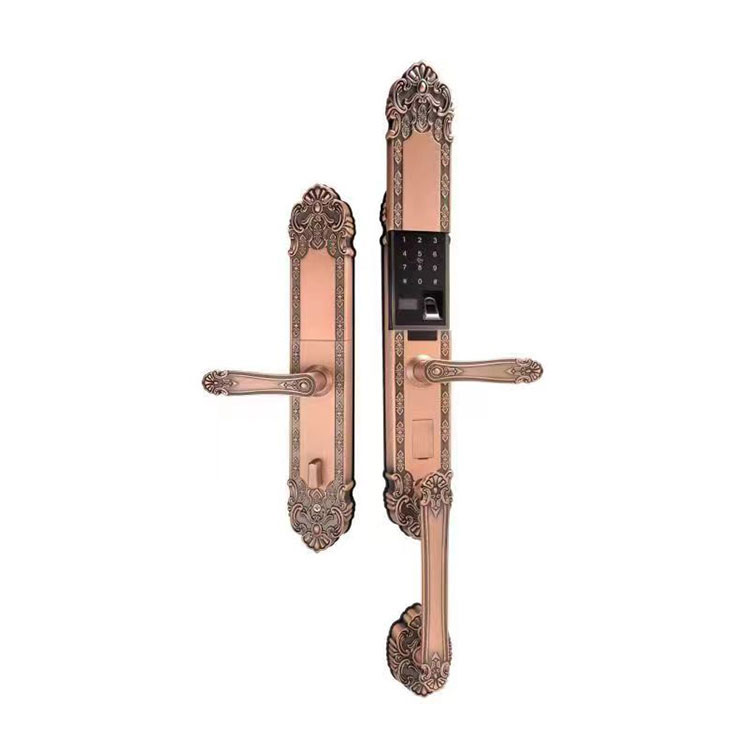
A Big Handle Door Lock is designed around a larger, easier-to-grip handle that increases leverage and control. That extra leverage can reduce the effort needed to retract the latch, especially when the door is heavy or slightly out of alignment.
What it is not: a magic fix for a badly installed door, a warped frame, or a strike plate that’s positioned incorrectly. If the door is fighting the lock, the right handle helps—but proper alignment still matters.
What “big handle” usually improves
- Faster entry and exit with less hand strain
- Better control with gloves, wet hands, or frequent use
- More forgiving operation when the door is heavy or used at odd angles
- A more “industrial-ready” feel for workshops, storage rooms, and exterior gates
Best-Fit Scenarios and Door Types
Big-handle designs are especially practical when access needs to be quick, consistent, and friendly for different users. Think less “showroom hardware” and more “this has to work every day.”
Common use cases
- Warehouses, workshops, and back-of-house doors with frequent traffic
- Outdoor gates, utility rooms, and storage areas exposed to weather
- Rental properties where different tenants need intuitive operation
- Facilities where staff often carry items and need one-hand operation
- Doors used with gloves (cold climates, industrial settings, cleaning staff)
If your door is very lightweight, used rarely, and kept indoors, a standard lever can be fine. But if you’re already experiencing “sticky operation” complaints, a big-handle option is worth considering.
Quick Comparison Table
Not sure whether you actually need a big handle? This table makes the trade-offs clear.
| Option | Strengths | Common Complaints | Best For |
|---|---|---|---|
| Big Handle Door Lock | High leverage, easy grip, faster operation under stress | Takes more space; requires correct fitting to avoid rubbing | High-traffic, heavy doors, outdoor entrances, glove-friendly access |
| Standard Lever Lock | Familiar feel, many styles, decent one-hand operation | Can feel “small” with gloves; less forgiving if latch binds | Homes, offices, moderate traffic, interior doors |
| Round Knob Lock | Low cost, common availability | Harder for weak grip; slower entry; frustrating with wet hands | Low-priority interior rooms with minimal use |
A Practical Selection Checklist
Choosing the right Big Handle Door Lock isn’t about the handle size alone. It’s about matching the structure, cylinder type, and materials to your door and environment. Here’s a checklist you can use before you buy.
- Door thickness and material: wood, metal, or composite; confirm the compatible range.
- Handing and direction: left/right opening and whether the handle is reversible.
- Locking method: key-in/key-out, key + thumbturn, or privacy function (depending on the door’s purpose).
- Cylinder preferences: choose a cylinder style and keying plan that fits your site management.
- Weather exposure: for outdoor use, prioritize corrosion-resistant materials and finishes.
- Usage level: higher cycle doors deserve stronger internals and tighter tolerances.
- Strike plate fit: if you’ve had jamming before, plan to adjust the strike during installation.
If you manage multiple doors, consistency matters: matching operation across entrances reduces user error (and reduces those “the lock is broken” calls that are really just unfamiliar handling).
Installation and Alignment Checks
Even a well-made lock can feel terrible if it’s installed on a fighting door. Before blaming the hardware, run these practical checks.
Five alignment checks that prevent lock complaints
- Latch-to-strike contact: close the door slowly and listen for scraping or “click-then-push.”
- Door sag: if the top corner rubs the frame, fix hinges first or the lock will wear prematurely.
- Strike depth: ensure the latch fully seats; partial engagement feels “bouncy” and insecure.
- Handle clearance: confirm the big handle doesn’t rub the door surface or frame under pressure.
- Screw tension: overtightening can distort components; tighten evenly and re-test.
This is also where a manufacturer’s engineering and process control matter. Zhongshan Kaile Technology Co., Ltd. focuses on building door lock solutions intended for practical use—where grip, leverage, and stable operation matter as much as appearance. If you’re selecting for projects, asking the supplier about fitment guidance and common installation pitfalls can save you real time later.
Maintenance That Prevents 80% of Failures
Most “sudden failures” are actually slow buildup: dust in the latch, dry friction, or a strike plate that drifted out of alignment. A simple routine keeps a Big Handle Door Lock feeling smooth for longer.
Monthly quick routine (2–3 minutes)
- Wipe handle and keyway area clean
- Check for loose screws and re-tighten evenly
- Test the door when gently pulling and pushing (to feel binding)
Quarterly deeper check (10 minutes)
- Clean latch area and strike plate pocket
- Confirm the latch fully engages without force
- Inspect for corrosion if used outdoors
If the latch starts sticking, don’t force the handle harder—fix the alignment. Over-forcing turns a small adjustment into a real repair.
FAQ
Is a big handle door lock more secure than a standard lever lock?
Handle size alone doesn’t determine security. Security depends on the lock structure, cylinder quality, installation, and whether the latch fully engages the strike plate. A big handle can improve consistent operation, which indirectly helps because a properly latched door is harder to defeat than a “half-latched” one.
Will a big handle fix a door that sticks or jams?
It can make the door easier to operate, but it won’t “cure” a misaligned strike plate, door sag, or warped frame. If your latch scrapes the strike, correct the alignment first—then the big handle becomes the comfort upgrade it’s meant to be.
What should I prioritize for outdoor installations?
Focus on corrosion resistance, a finish that suits your environment, and smooth internal operation after exposure to dust or moisture. Also plan for routine cleaning—outdoor hardware gets dirty faster than indoor hardware.
How do I choose the right configuration for a rental property?
Prioritize intuitive operation, stable latching, and a consistent keying plan across doors. In rentals, fewer “special instructions” usually means fewer lockouts and fewer maintenance calls.
What are signs that the problem is the door alignment, not the lock?
If the handle works smoothly when the door is open, but becomes hard to turn when the door is closed, it’s often alignment. Another sign is needing to lift/push the door to lock it—classic hinge or strike plate issues.
Final Takeaway and Next Steps
If your priority is fewer complaints, faster access, and reliable operation on a busy or outdoor entrance, a Big Handle Door Lock is a practical upgrade—especially when you match the lock to the door thickness, environment, and real usage level.
The smartest approach is simple: fix door alignment first, choose the right materials for your setting, and install with clearances in mind so the handle and latch move freely. When those basics are right, the big handle becomes what it should be—smooth, confident access, every day.
Ready to spec a big-handle solution for your project?
Tell us your door type, thickness, environment (indoor/outdoor), and the function you need (entry, privacy, storage, etc.). The team at Zhongshan Kaile Technology Co., Ltd. can help you narrow down the right configuration and avoid common fitment mistakes.
contact us